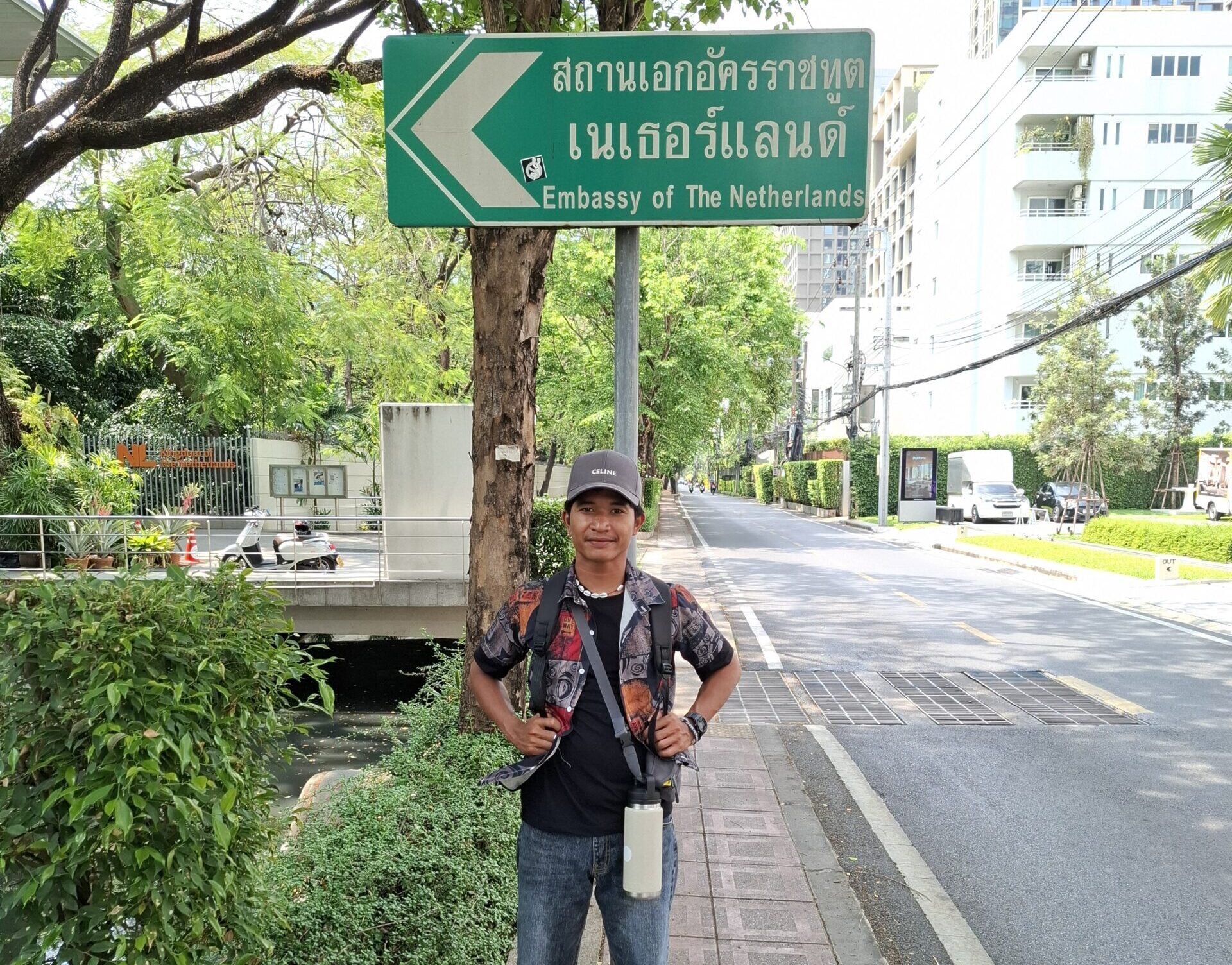
Last week Joey went to Bangkok for his appointment at VFS Global to apply for a Schengen visa so he can visit me in the Netherlands. He wants to support me when I give birth to our son and help during the weeks surrounding it.
Getting a Schengen visa for a Thai partner is not always easy. There are quite a few requirements and documents to prepare.
In this post I’ll share our experience with collecting all the documents and hopefully help you prepare if your Thai partner wants to visit you as well.
Note: This guide is written for a Schengen visa for the Netherlands. Every Schengen country has slightly different requirements, but most of them come down to a very similar list.
Step 1: Collect all the documents
Filled-in application form
Fill in the application form online. Either you or your Thai partner can complete it. Just make sure it is filled in using their name and email address. Print the completed form and let your partner sign it.
Passport
They’ll need their original passport and a copy of it.
Passport photo
They can take one themselves, or if you apply through VFS Global they can make one for you.
Proof of social or economic ties with Thailand
This can include:
- an employment contract and a letter from their employer
- proof that they own land or a house in Thailand
- proof that they own a car or motorcycle
- proof of running a business
- university enrollment
- proof that close family members live in Thailand
- any other documents that show strong reasons to return to Thailand
In our case Joey didn’t really have any of these. He doesn’t have a formal employment contract and would have to temporarily stop working in order to travel to the Netherlands.
Instead, we explained his situation in a personal letter.
The reason immigration officers ask for this proof is because they want to be sure you’ll return to Thailand after your visit. They want to prevent people from overstaying their visa.
We explained Joey’s work situation and also mentioned that our long-term plan is to move to Thailand as a family. This gives Joey no reason to stay in the Netherlands after his visit.
At the time of writing we still don’t know whether this will be enough. I’ll update this article once we’ve received the visa decision. Hopefully it is!
Document showing where your partner will stay in the Netherlands
This can be either:
- a hotel reservation, or
- a completed “garantstelling en/of particuliere logiesverstrekking“ form, legalized by your municipality.
In my case I still live with my parents in the Netherlands, so my mum filled in the form and we went together to the municipal office to have it legalized.
Proof of funds
Your Thai partner can show they have sufficient funds themselves by providing recent payslips and bank statements.
If someone in the Netherlands is sponsoring the trip, they can instead submit a legalized “garantstelling en/of particuliere logiesverstrekking” form together with their recent payslips.
Again, in our case my mum kindly offered to be the sponsor because my income isn’t stable enough while I’m travelling.
This is the same form that you use to declare where your partner will stay, so you can have both sections legalized during the same appointment at the municipality.
Health insurance
The insurance must:
- be valid for the entire stay in the Schengen area
- cover at least €30,000 in medical expenses
There are several companies that offer suitable insurance, so it’s worth comparing prices and conditions.
We chose OOM Verzekeringen because it’s one of the best-known providers in the Netherlands and is accepted for Schengen visa applications.
Proof of your relationship
If you’re married, this can simply be your marriage certificate.
If you’re not married, you’ll need to collect evidence of your relationship.
Examples include:
- photos together over a longer period of time
- call logs
- travel stamps showing visits to each other
- flight tickets
- hotel bookings
- text or letters written to each other
In our case we included a translated version of our Thai marriage certificate.
Because we had only recently gotten married, we also included photos of us together, my previous Thailand entry stamps, screenshots of part of our call history (with only the dates visible), a pregnancy statement from my midwife, and a couple of ultrasound photos.
We also both wrote personal letters explaining our situation.
Personally, I wouldn’t include chat screenshots because of privacy reasons, but that’s completely up to you.
Personal invitation letter
This isn’t listed as an official requirement, but I personally think a letter written by you and/or your partner adds a very personal touch to the application. It helps explain your situation and makes your application feel more human.
I believe this can only strengthen your application.
We included two letters: one written by Joey and one by me.
We explained why it is so important for us to be together as a family during the birth of our son, why I’ve chosen to give birth in the Netherlands, Joey’s work situation, and our plans to move to Thailand after the birth. Most importantly, we clearly stated that Joey intends to return to Thailand after his visit.
Please note: Visa requirements can change. Always double-check the official Dutch government website before submitting your application.
Step 2: Make an appointment
Once you’ve collected all the required documents, you can make an appointment at VFS Global in Bangkok.
Try to book your appointment well in advance because the application process can take some time.
Usually a decision takes around 14 days, but it can take up to 45 days if additional documents are requested. You can submit your application up to 6 months before your intended travel date.
During the appointment they’ll collect your documents (including your passport), take your fingerprints and photograph, and you’ll pay the visa fee of €90 (around 3500 Thai baht) in cash.
Afterwards you can choose whether to collect your passport yourself or have it sent back by post.
For us there were plenty of appointment slots available in Bangkok. We were able to book an appointment for the following week. The appointment itself took around an hour and a half. Joey had to wait a few times between handing in his documents, having his fingerprints and photo taken, and paying the visa fee.
So, how much does a Schengen visa cost?
Besides collecting all the paperwork, applying for a Schengen visa can also become quite expensive. Here are the main costs we had:
| Cost | Price |
| Schengen visa fee | €90 |
| VFS Global service fee | Around €20 |
| Municipality legalization fee | €9.50 |
| Travel insurance | From around €1.75 per day (depending on the length of your stay) |
Other possible costs:
- Travel to Bangkok
- Passport mailing fee (if you choose delivery)
- Printing and copying documents
- Document translations (if required)
For us, the total came to around €336, and we hadn’t even booked Joey’s flight yet.
It’s kind of crazy to think that you need all this paperwork, time and money just to spend a few weeks with the person you love. But that’s a discussion for another day.
Step 3: Waiting for approval
This is definitely the hardest part.
At the time of writing we’ve been waiting for two weeks and still haven’t heard anything.
They told us it might take around 21 days because of the situation in the Middle East, so now all we can do is wait patiently and hope for good news.
For now, I wish you goodluck on your schengen visa application! I hope this blog was useful and you were able to succesfully get a visa!
Update: We’ve got some good news! Joey’s visa was approved after 20 days and he will be traveling to the Netherlands soon.
-x- Esmee