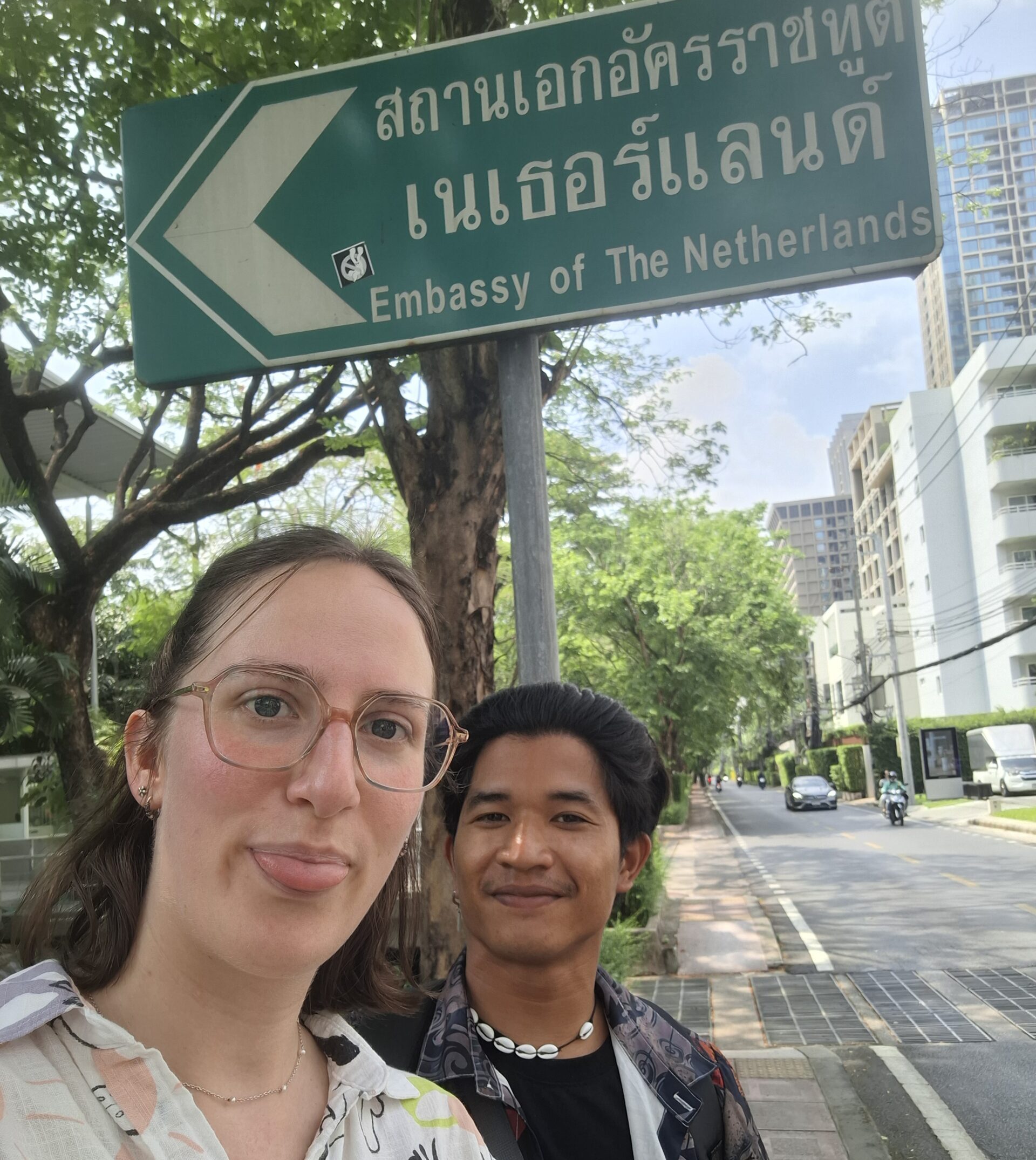
When Joey and I decided to get married in Thailand, it wasn’t because we had always dreamed of a big wedding. At the time, we had just discovered that we were expecting our first child together, and we wanted to make sure everything was arranged properly for our growing family.
Getting married would make it easier to register and recognize our child in both Thailand and the Netherlands, and it would also give us more options for the future, including the possibility of applying for a Thai marriage visa. Most importantly, it felt like the right next step for us as a couple.
We thought the process would be a simple visit to a government office. Instead, we spent over a month collecting documents, visiting embassies, arranging translations, and waiting for approvals.
For us, it was absolutely worth the effort. In this guide, I’ll explain the process step by step and share our experience as a Dutch woman marrying a Thai man.
Important: Marriage Registration vs. Wedding Ceremony
Before we begin, it’s important to understand that this article is about officially registering your marriage, not about having a wedding ceremony. In Thailand, a marriage is only legally valid once it has been registered at the local District Office (Amphur). A traditional wedding ceremony is separate and does not automatically make your marriage legally valid.
Step 1: Obtain Your Required Documents
As a foreigner marrying a Thai citizen, you will generally need:
1. Proof of Single Status
This document confirms that you are legally free to marry.
In many cases, you can obtain it through your embassy in Thailand. However, some embassies require documents from your home country before they can issue it.
As a Dutch citizen, I first needed to obtain an extract from the Dutch Personal Records Database (Basisregistratie Personen, or BRP) from my municipality in the Netherlands.
I also had to complete two forms before my appointment at the Dutch Embassy in Bangkok:
- Application form
- Witness and income declaration form
For more information about getting married in Thailand as a Dutch citizen, I recommend visiting the website of the Dutch Ministry of Foreign Affairs.
2. Certified Copy of Your Passport
Your embassy will usually prepare a certified copy of your passport during your appointment.
Embassy Appointment
I highly recommend booking your embassy appointment well in advance. In my experience, the Dutch Embassy often requires appointments to be scheduled at least two weeks ahead.
During the appointment, you’ll submit your documents and pay the required fees. The embassy will then issue:
- Your declaration of single status
- A certified copy of your passport
Step 2: Translate and Legalize Your Documents
Once you have your embassy documents, they must be:
- Translated into Thai
- Legalized by the Thai Ministry of Foreign Affairs (MFA)
We used Sawadee Translations in Bangkok, but you can use whichever translation office you prefer. They translated our documents and handled the legalization process on our behalf.
Since we didn’t want to stay in Bangkok waiting for everything to be processed, this was a convenient option. About two weeks later, the translated and legalized documents arrived at our home.
Alternative Option
You can also handle the process yourself.
After obtaining the translations, you’ll need to make an appointment with the Thai Ministry of Foreign Affairs.There, you can submit the translated documents for legalization.
Depending on the service you choose, processing can take anywhere from the same day (express service) to several days.
Once completed, your documents will be returned with official stamps and legalization stickers.
Step 3: Prepare Your Thai Partner’s Documents
Your Thai partner will generally need:
- Thai ID card
- Copy of their house registration book (Tabien Baan)
Step 4: Arrange Two Thai Witnesses
You will also need two Thai witnesses for the marriage registration.
Requirements may differ between District Offices. Some offices may simply require witness information, while others require the witnesses to be physically present.
In our case, both witnesses had to attend the registration and sign the documents in person.
Step 5: Submit Your Documents at the District Office (Amphur)
Once all documents are ready, you can visit the District Office.
When we submitted our paperwork, the staff reviewed our documents and provided several forms to complete.
These included:
- Personal information forms
- Questions about my visits to Thailand, including when I first visited and my most recent visit
- Witness information forms
After completing the paperwork, we returned everything to the office.
The staff informed us that they would review the documents and contact us once the process was complete. We registered our marriage at the Amphur on Koh Phangan. In our experience the staff was very helpful and friendly. This made the process much smoother.
Step 6: Sign the Marriage Registration
About a week later, we received a phone call from the District Office.
On April 28, we returned with our witnesses and signed the final documents. During the registration, I was asked whether I wanted to change my surname. This is a personal decision, and I recommend discussing it with your partner beforehand.
I chose to keep my own surname. One reason was that changing it would have required updating various official documents, which can be a lengthy process.
The staff prepared our marriage certificate and officially registered our marriage.
Afterward, we were invited into another room to take a photo with the head of the office. It was a fun and unexpected part of the experience.
Just like that, we were officially married!
How Long Does the Process Take?
From my embassy appointment to receiving our marriage certificate, the entire process took a little over one month.
However, Songkran fell in the middle of our application period, and many government offices were closed for approximately one week.
If you’re visiting Thailand specifically to get married, I would recommend planning for 6–8 weeks to allow for unexpected delays, public holidays, or additional document requests.
| Step | Time |
|---|---|
| Embassy appointment waiting time | 2 weeks |
| Translation & legalization | 2 weeks |
| District Office review | 1 week |
| Total | 5–6 weeks |
Registering Our Thai Marriage in the Netherlands
Unfortunately, our paperwork didn’t end there.
I also wanted our marriage to be registered in the Netherlands.
This required another round of translation and legalization for our newly issued Thai marriage certificate.
Once again, we used Sawadee Translation to:
- Translate the marriage certificate into English
- Obtain legalization from the Thai Ministry of Foreign Affairs
Because I had already returned home, Joey visited the Dutch Embassy on my behalf to obtain the final legalization.
He then mailed the translated and legalized documents to the Netherlands.
After receiving them, I visited my local municipality and officially registered our marriage.
Only then was the entire process finally complete.
Final Thoughts
Getting married in Thailand as a foreigner requires patience, organization, and a fair amount of paperwork. The process can feel overwhelming at times, but if you prepare your documents carefully and allow enough time, it is very manageable.
For us, every trip to an embassy, translation office, and government department was worth it. Knowing that we had taken an important step for our future as a family made all the paperwork feel worthwhile.
Now, with our marriage officially registered in both Thailand and the Netherlands, we can focus on preparing for the arrival of our son and the adventures that lie ahead.
If you’re planning to get married in Thailand, I hope our experience helps make the process a little easier. And if you’ve already started the process — good luck, and congratulations on your upcoming marriage!
-x- Esmee